|  |  |
|---|---|---|
 |  |  |
Click on an image to view full size
It doesn’t get any better than this.
As I brought my bride of 64 years her Mother’s Day breakfast in bed, my thoughts moved back in time to my own mother. I was born May 8, 1936. In August of that same year, we were on the freighter the Roddy S. for the first of many nine hour boat trips to our home for the winter at Albert’s Point on Humbuck Bay. My father and his brother Hannes had seized an opportunity to buy a run-down fishing station there from a man known as Footless Cope.
This was the height (or depth?) of the Depression and every opportunity to feed your family was seized upon. Footless Cope, whose real name was Cubby Jacobson, owned the fishing station at Albert’s Point and had a 99 year lease with a $2 annual fee. It consisted of an icehouse, bunk house and a magnificent log cabin. The log cabin had been constructed by two experienced ‘axe men’ from Sweden. They felled and peeled 25-foot White Spruce logs and first built the kitchen. They then added another 20-foot log cabin for the family and to complete the job, they added a third bedroom/office.
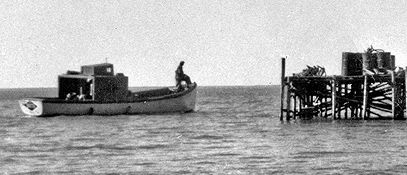
Every August 15th for the next six years, the Kristjanson brothers would come home after spending two months 200 miles north on lake Winnipeg fishing for whitefish. After a brief rest, they would load the 35-foot Booth rental gas boat #10 with their families, groceries, tools, clothes, cooking utensils and anything else deemed necessary to sustain us until September 1st when the Freighter would return with the contract fishermen.
On the early boat to Albert's Point, were my mother Annie, her sister Sophie (married to my dad's brother Hannes), Robert and I, cousin Beverley, and a group of hired men. As we would be there first, our priority was to rebuild the dock which had been destroyed in the spring when the ice left the shore.
To assist in cooking for upward of a dozen men in the fall, Dad had bought a huge wood burning cook stove from a luxury hotel in Winnipeg that was converting to gas. Of course we were situated in a vast forest, so fuel was literally out our front door. The stove had been left on the beach by the Cat train on their last trip of the season. To haul this monstrosity to the kitchen, a distance of 200 yards, they borrowed a process from the Egyptians. They used the planks that had been brought to build the dock and fashioned a wooden sidewalk. Then they end cut poplar logs for rollers and lined them up along the ‘sidewalk‘. The enormous stove was levered onto the first roller and then pushed over the log rollers up the sidewalk. Used rollers from behind the stove were picked up and quickly run ahead so they could be placed ahead of the stove and rolled over. Rinse and repeat all the way across the beach to the cookhouse.
On September 1st my Afi and Amma would arrive to live next door in a newly constructed log cabin. Afi’s job was to bank the ashes so the stove would be ready for 4 am when cooking would get under way. My parents alternated the breakfast duties with Hannes and Sophie every other week. My bunk was against the inner wall. For some reason the workers had cut a 6-inch window in the log above my head. Growing up, this gave me a great view of the kitchen. While my father fired up the stove, mother and the newly arrived assistant baby sitter, 16 year old Victoria Malinowski, would start cooking the fresh cut bacon and making toast.
The flour for making the bread which would become breakfast toast, came in 100 pound sacks, which the pioneers turned into aprons and dresses. The flour sacks were also made into ‘coffee socks’, so named because they were cut and sewn into the shape of a sock, which was stitched over a copper ring and used to make coffee. Coffee came in 25 pound boxes from J.J.H. McLean and Co. The coffee was scooped into the sock and boiling water was poured over it into a giant urn. The water had been hauled from the lake a 100 feet away the night before. The men looked forward to strong coffee and a sugar cube. At a very young age, my brother Robert and I discovered that by using 3 spoons of sugar the coffee was great. (Since then I have drank 8 cups of coffee every day. Sans sugar now.)
Two dozen loaves were baked fresh every week in the cavernous oven. The aroma made your mouth water. As the ladies worked, my father set the table and either hummed a tune or sang. He had a great voice. The radio was not turned on until 6 am for the CBC news. We only had 1 dry cell battery to last the winter, so everything including the radio use was rationed. The only exception was the noon CBC message period. And of course for Foster Hewitt at 7pm for the Saturday night hockey game.
And so, in the morning, I would look through my special window and see men take their seats at the long table in the White Spruce log kitchen promptly at 5:50am, waiting for the news. Strong coffee brewed in the flour bag sock was poured from the urn, sugar cubes distributed and fresh bread served from the enormous hotel oven. My mother wielded the giant skillet with its mountain of fresh cooked bacon and eggs, and greeted each man with a smile as big as Lake Winnipeg.
My father, pouring coffee under the light of a Coleman lantern in our home with no running water whispered, “Happy Mother’s Day”. Mother touched his shoulder ever so slightly & whispered back, “It doesn't get any better than this”.
Ken Kristjanson
April 2026
A foot note: One winter, a blizzard stranded Cubby Jacobson and his dog team on the big lake. In the morning the storm had abated and Cubby made it to shore, where his frost bitten toes were unceremoniously amputated to prevent gangrene from setting in. The Icelandic way of giving nick names was applied and 'Footless Cope' was born.
Please check out an original song created by Bill Buckels that is based on this short story.